On an earlier blog about Amalgam Removal, we mentioned that we would share parts of our journey to have the amalgam/mercury fillings removed from our mouths. We feel that this is an important part of healing in this toxic modern world.
Mercury is often discussed as one of several heavy metals that can be disruptive to the body. The EU has now banned the use of amalgam fillings.
This was our third visit to this holistic dentist in London, Daniel Sutcliffe. There are very few dentists in the UK that specialise in the removals in the way that he does.
So, here’s the next part of our ‘journey’: visit number three.
This time, here's a photo of me in the dentist chair just before Daniel started on my teeth:
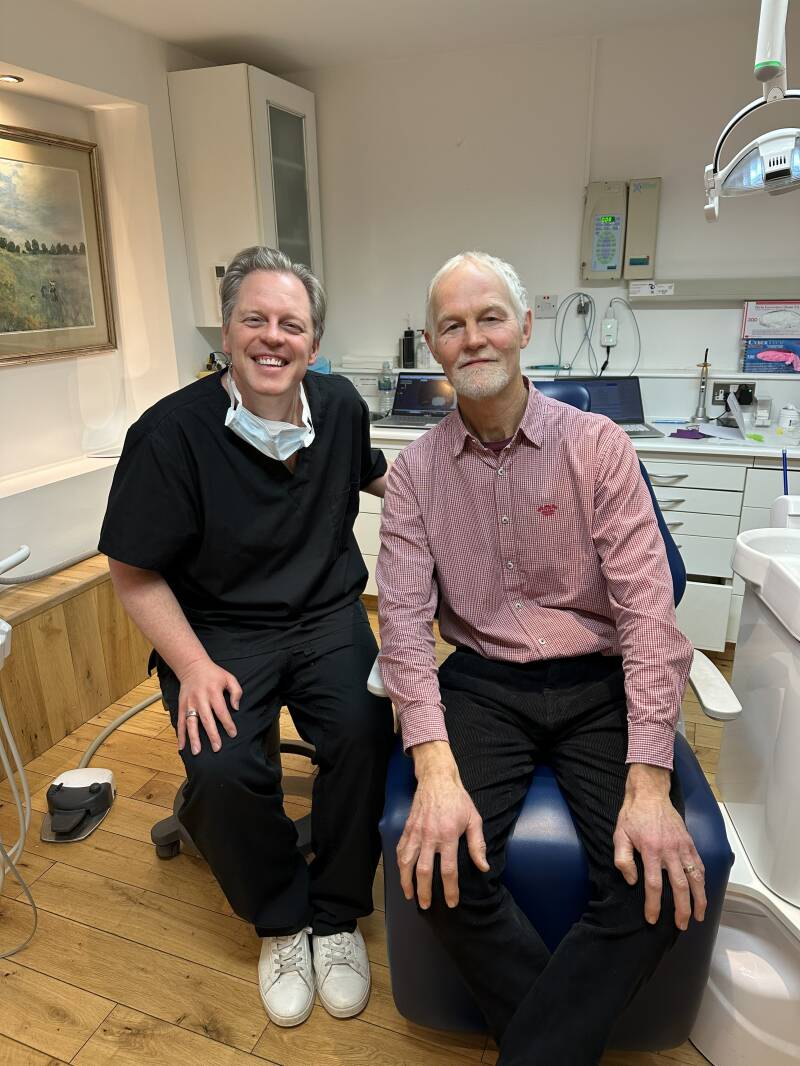
It has worked out that we are spacing our dental visits at roughly two-week intervals. Is this some kind of ideal timing to allow the teeth, body, and overall health to recover between visits? After all, there is a lot of work done in the mouth, along with the potential for heavy metals to be disturbed and released.
So what is the answer?
There really is no ideal spacing. Everybody responds differently to this kind of treatment. Some people need more time between visits, others less. Hannah and I certainly respond very differently.
The anaesthetic, combined with the physical impact of dentistry on the jaw and head, as well as the disruption caused by heavy metals, has a significant effect on Hannah. She experiences headaches, joint pain, swelling, and an increase in her chronic fatigue. By contrast, I tend to bounce back quite quickly from the anaesthetic and dental work.
Interestingly, on this visit, no amalgam fillings were actually removed.
So how many amalgams can be removed in one visit? The initial plan for this third visit was for me to have my final three amalgams removed. However, on the day, after discussion with Dan, we agreed instead to remove two of my crowns and replace them with composite inlays, leaving the final three amalgams for the next and final visit.
To put the overall picture together, our mercury removal journey now looks like this:
- Visit one: Hannah only. Two very large amalgams removed.
- Visit two: Hannah’s remaining three amalgams removed, and my first four removed, all on one side, two upper and two lower.
- Visit three: No amalgams removed, but other important restorative work carried out, explained below.
- Visit four (in two weeks): Hannah will have her final inlays fitted, and I will have two inlays fitted along with the removal of my final three amalgams.
At that point, we will both be free of mercury and gold in our mouths.
Returning to the earlier question—how many amalgams can be removed in one visit? Again, there is no one-size-fits-all answer. Our maximum so far has been four in a single visit. It depends on how large the amalgams are and what other work is being done at the same time.
In my case, with seven mercury fillings in total, Dan has said he could probably have removed all of mine in one visit. That feels quite staggering to think about. However, because additional work was needed on my front teeth and other restorations, it made more sense to spread things out.
Decisions and consultation
For this third visit, both Hannah and I needed to make some careful decisions following consultation with Dan.
For Hannah, there was a concern raised from one of the X-rays, which appeared to show a small amount of something trapped beneath a filling she had received many years ago. It was unclear whether this was mercury or simply a calcium deposit. Dan explained that it could be either. After some thought, Hannah decided to have that “good” filling removed so that whatever was underneath could be properly dealt with. The consequence of that decision is that this could not be her final visit, as an inlay would need to be fitted later.
For me, there were two separate issues. One was a gold tooth which Dan had previously noted had developed a hole. The other was a large, old filling in my upper jaw that had left a gap where food would regularly become trapped, often painfully. After discussing the options, I decided to leave my remaining three amalgams for the final visit and instead address the gold tooth and replace the problematic large filling.
Hannah spent a solid hour in the chair, followed by me for around an hour and a half.
Once again, it feels remarkable that we could leave this third visit feeling genuinely pleased with both the experience and the progress. There was no denying that a lot of work had been done, but it felt deeply reassuring to know that this important restorative work was taking place.
A milestone for Hannah
For Hannah, this visit also marked a major milestone. There are now no mercury fillings remaining in her mouth 🎉
We understand that heavy metals may still be present in her body as a result of years of exposure and leaching, potentially affecting tissues and organs beyond the mouth. Our next phase will likely involve some form of gentle chelation and detoxification, taken slowly and carefully to avoid overwhelming the body.
For now, though, this feels like a huge moment, particularly in relation to Hannah’s ongoing battle with chronic fatigue. The primary source of heavy metal exposure from her mouth has now been removed.
Living and working regeneratively has taught us that meaningful change rarely comes from quick fixes. Whether it is soil, livestock, or our own health, recovery happens when sources of harm are removed and space is given for repair to take place at its own pace. Just as damaged land needs time, patience, and careful stewardship, so do our bodies.
This visit felt like the same philosophy applied inward—removing sources of toxicity, allowing the body to respond, and trusting the slow process of healing 🌱
Recovery
We are not dressing this up to sound easy or painless.
This latest visit involved a lot of intervention in the mouth. For Hannah, the anaesthetic took a heavy toll, bringing on severe headaches and some strong detox responses. She experienced two nights of intense sweating, along with a resurgence of symptoms such as bloating, sore joints, and fatigue. Some years ago, before we began our health journey, we might have reached for painkillers, but those days are behind us. We now believe the body needs to move through its healing processes without suppressing those signals.
For me, recovery was swift. Within a couple of days, I felt almost back to normal.
A calm, tube-free London day
And what about the journey to London this time?
We kept tube-free 🚶♂️🚶♀️. We genuinely prefer and enjoy the 20-minute walk from Marylebone Station to the dentist rather than navigating the stressy tube system. It gives us time to warm up, clear our heads, and prepare mentally for the visit—plus, it’s good exercise.
It was a cold, dry day, and as our treatment finished around 12:15pm, we decided to use the few hours before our booked train to slow things down and gently wander through some of London’s streets. A bit of movement felt like a good way to help the anaesthetic wear off.
We headed towards Oxford Street, where Hannah spotted Liberty tucked down one of the side streets. We made a spontaneous detour, and what an impressive building it is. The exposed timber structure is truly something to behold, with a wonderful atmosphere throughout. The prices were equally impressive, with chairs at £2,500 and dresses around £1,000, so we admired without any temptation to open our wallets 😄
Can’t resist sharing two photos here. The first is when Hannah and I stepped inside the imposing, grand entrance of Liberty. It greats you with a huge ‘rooted in wellness’ sign. So cool. And the second photo is of us showing of this amazing well of exposed beams in this magnificent building.

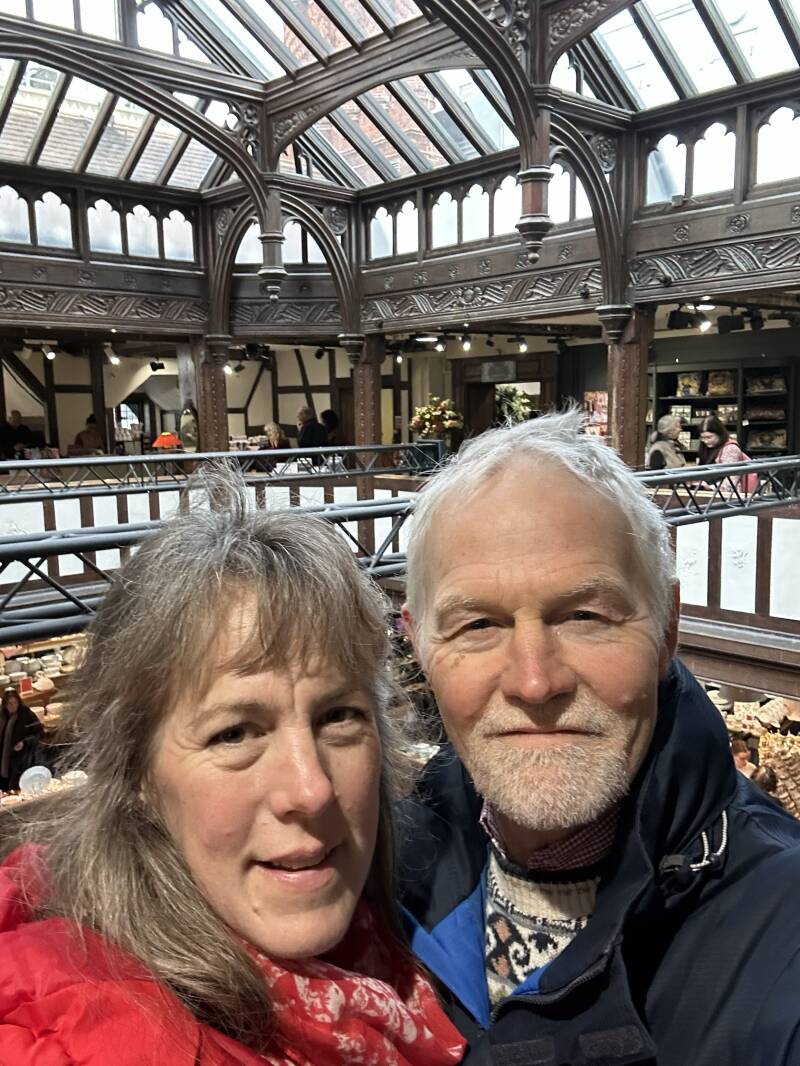
From there, we made our way to Regent Street and stopped for an organic coffee at Pret. I was still too numb to enjoy one, but Hannah did. We then continued past the magnificent Selfridges building, admired it from the outside, and slowly walked down towards Marble Arch before heading back to Marylebone Station.
On the way, I picked up an organic coffee from a small chain called Arro. If you are a coffee lover, it is worth seeking out organic options, as conventional coffee is one of the most heavily sprayed crops.
Dan also shared a couple of helpful tips. As well as being a highly specialised dentist, he lectures on nutrition. His advice with coffee is to protect your teeth from acid by drinking water alongside it. Either sip water between mouthfuls or drink some at the end. The water helps neutralise acidity. The same principle applies to apple cider vinegar. His suggestion is to continue enjoying it for its benefits, but consider using a straw to protect the teeth.
The train home was a little busy and cramped, but otherwise smooth, and thankfully there were no tyre dramas this time.
Detox and destress in the hot tub
Back home, after a simple supper, we were able to light the wood-fired hot tub. Immersing ourselves in the warmth was not just relaxing—it helped us both detox and destress after a lot of dental work 💧🔥. Slowly letting the body respond, releasing tension, and enjoying the quiet moment felt like the perfect way to close the day.
About our dentist
For anyone interested, the dentist we have been seeing is Daniel Sutcliffe of The Bespoke Dentist, based in Harley Place, London. His website is
Holistic Private Dentistry in London - Amalgam Removal - The Bespoke Dentist
He has a wealth of excellent reviews, which can be found on
https://thebespokedentist.co.uk/reviews/
A gentle note
This post is shared for general interest and to document our personal experience. It is not intended as medical or dental advice, and we are not suggesting that the choices we have made are right for anyone else. Everybody’s health journey is unique, and nothing here should be taken as a recommendation or instruction. We are simply sharing our lived experience as we learn, observe, and make choices that feel right for us.
Home Page for this Website:
Our YouTube channel, @RootedInTheGut:
Add comment
Comments